
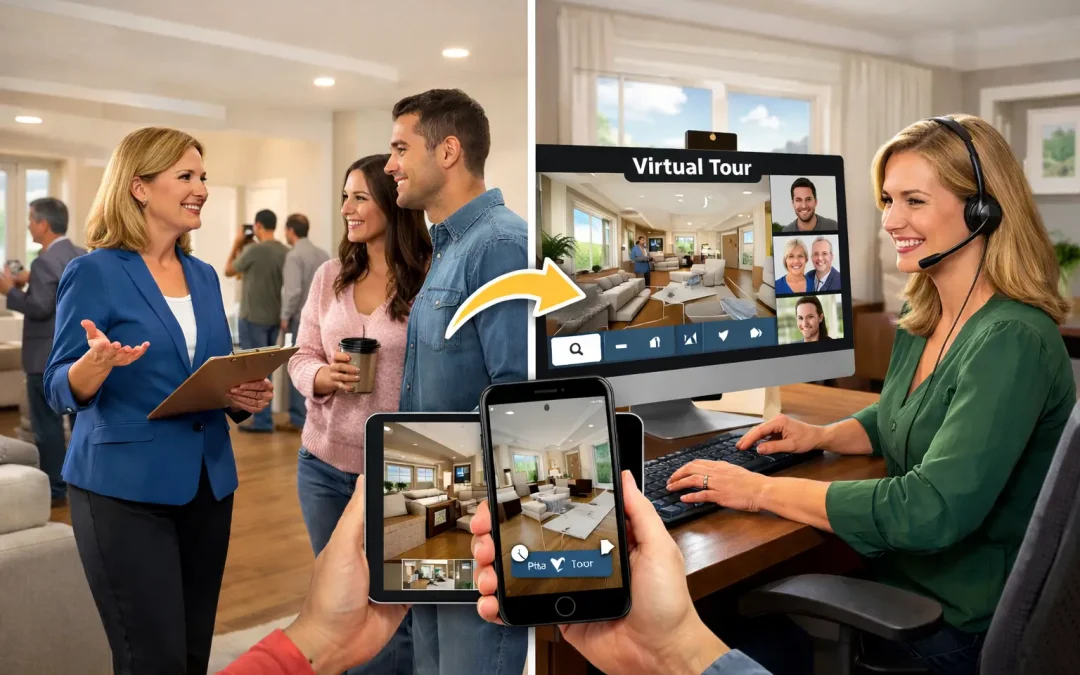
Virtual tours have gone from a “nice extra” to a serious advantage in real estate marketing. Buyers expect to preview homes online, sellers expect strong digital exposure, and agents who deliver both tend to win more listings and attract better-qualified buyers.
In today’s market, virtual tours for real estate aren’t just for luxury properties—they’re a practical tool agents use to build momentum before, during, and after an open house. Below is how top-performing agents use 3D virtual tours, 360 home tours, and interactive walkthroughs to drive more showings, more offers, and faster sales.
What Is a Virtual Tour in Real Estate?
A real estate virtual tour is an interactive, online way for buyers to explore a home remotely. Common formats include:
-
3D virtual tours (walkthrough-style, room-to-room navigation)
-
360 virtual tours (panoramic views from key spots)
-
video walkthrough tours (guided video tour with motion and pacing)
-
floor plan tours (2D/3D layouts tied to the tour experience)
The big benefit: buyers can understand the flow of the home and the layout faster than with photos alone.
Why Virtual Tours Matter for Open Houses
An open house is about one thing: attention + urgency. Virtual tours help agents create both by:
-
Pre-selling the home to serious buyers
-
Filtering out time-wasters
-
Increasing online reach beyond local foot traffic
-
Making follow-up easier after the event
When done right, virtual tours during an open house don’t replace in-person viewing—they multiply it.
From initial website visit to lease signing, Interactive 360º Virtual Tours enhance every step of the resident journey.
1) Agents Use Virtual Tours to Promote the Open House Before It Happens
Here’s the blunt truth: open houses attract a mix of serious buyers and casual browsers. Virtual tours help agents sort that out.
A buyer who watches a full 3D home tour is usually more committed than someone who only swipes photos. Agents use that behavior as a signal.
How this helps:
-
More conversations with motivated buyers
-
Better questions at the open house
-
Fewer “just looking” visitors
-
More efficient follow-up afterward
It’s also a strong tool for relocation buyers and out-of-town investors who can’t attend—but might still write offers.

2) They Use Virtual Tours to Qualify Buyers Before the Open House
The best open houses are won days before the sign goes up. Agents use virtual tours to build interest early and get buyers to commit to coming in person.
Where agents publish real estate virtual tours:
-
MLS listing (where allowed)
-
Zillow, Realtor.com, Redfin (depending on platform support)
-
Google Business Profile posts
-
YouTube (video walkthrough version)
-
Instagram Reels/Stories + link in bio
-
Facebook Marketplace and neighborhood groups
-
Email blasts to buyer lists and agent networks
SEO keywords that drive traffic often include:
-
“virtual tour real estate”
-
“3D virtual tour for home listing”
-
“360 virtual tour open house”
-
“interactive home tour”
-
“online house tour”
When a tour is embedded directly on a listing page, buyers stay longer—more time on page, more engagement, more inquiries.
3) Agents Use Virtual Tours During the Open House for Self-Guided Flow
On a busy open house, the agent can’t personally walk everyone through every detail. Virtual tours create structure.
Common “during open house” uses:
-
QR codes on flyers and signage linking to the tour
-
A tablet or TV display running the virtual tour loop
-
A guided “start here” section for buyers who arrive early
-
A backup for rooms that are crowded (buyers can revisit digitally)
This helps visitors revisit key spaces like kitchens, primary suites, and backyard areas without waiting for traffic to clear.
4) They Use Virtual Tours to Highlight Features That Are Easy to Miss
Buyers miss things during open houses—especially if they feel rushed or distracted. Virtual tours help agents control the story.
Features virtual tours help emphasize:
-
Layout and room connections (flow matters)
-
Ceiling height and space perception
-
Renovation details and finishes
-
Outdoor areas and property lines (when captured well)
-
Bonus rooms, basements, and storage
Photos can make rooms look bigger or smaller depending on lens distortion. A well-made 3D virtual tour usually gives a more honest sense of scale—something serious buyers appreciate.

5) Agents Use Virtual Tours to Reach More Buyers After the Open House
After the open house, most agents post a “Thanks for coming” message and hope for calls. Smart agents use the virtual tour to keep the home circulating.
Post-open house virtual tour strategy:
-
Send the tour link to every attendee
-
Share “missed it?” posts with tour link and showing availability
-
Message hot leads: “Rewatch the tour—happy to book a private showing”
-
Send the tour to other agents with qualified buyers
This is where tours quietly do the heavy lifting: they keep the home selling even when the open house is over.
6) They Use Virtual Tours to Win More Listings From Sellers
Sellers love marketing that looks professional and modern. Many agents use virtual tours as part of the listing presentation to justify commission and stand out.
What sellers hear (and it works):
-
“Your home will be available to buyers 24/7”
-
“We’ll attract out-of-area buyers”
-
“We’ll reduce unqualified showings”
-
“We’ll create better follow-up content after the open house”
In competitive listing markets, virtual tours for real estate agents can be the difference between getting the listing and losing it to someone else.
Best Practices: How to Make Virtual Tours Actually Work
Virtual tours can backfire if they’re sloppy. Here’s what separates effective tours from forgettable ones:
-
Clean staging and lighting before scanning
-
Simple navigation (no confusing jump cuts)
-
Accurate color and exposure
-
Capture outdoor spaces if they sell the lifestyle
-
Make sure the tour loads fast on mobile
-
Add clear calls-to-action: schedule a showing, contact agent, request info
If your tour makes the home feel dark, cramped, or glitchy, it will cost you buyers.
Virtual Tours vs. Video Walkthroughs: Which Is Better for an Open House?
They do different jobs.
-
3D/360 virtual tours: best for self-guided exploring and layout understanding
-
Video walkthrough tours: best for social media reach and emotional storytelling
Many agents use both: video to attract attention, 3D tour to qualify and convert.
Final Thoughts: Virtual Tours Make Open Houses Stronger, Not Smaller
Open houses still matter. People want to feel the space. But virtual tours make open houses more efficient and more profitable by driving better traffic, improving follow-up, and increasing reach.
If you’re an agent trying to modernize your marketing without becoming a tech clown show, this is one of the cleanest upgrades you can make: a high-quality real estate virtual tour paired with a smart open house plan.
Let’s Chat
Claim Your Free Virtual Tour + Pro Photography Session (For Newly Signed Agents & Channel Partners)