

Real Estate Photography or 360 Virtual Tours can make or break a listing’s first impression—because most buyers decide whether to click, save, or book a showing in just a few seconds.
Real estate has always been a “show me” business. Back in the day, that meant a yard sign, a stack of flyers, and a handshake at the open house. Today, it still means “show me”—but now the showing starts on a phone screen, in under three seconds, and usually without sound.
That’s why real estate photography and 360 virtual tours aren’t “nice extras” anymore. They’re the digital curb appeal of your listing. And the truth is: the best marketing isn’t either/or.
It’s both.
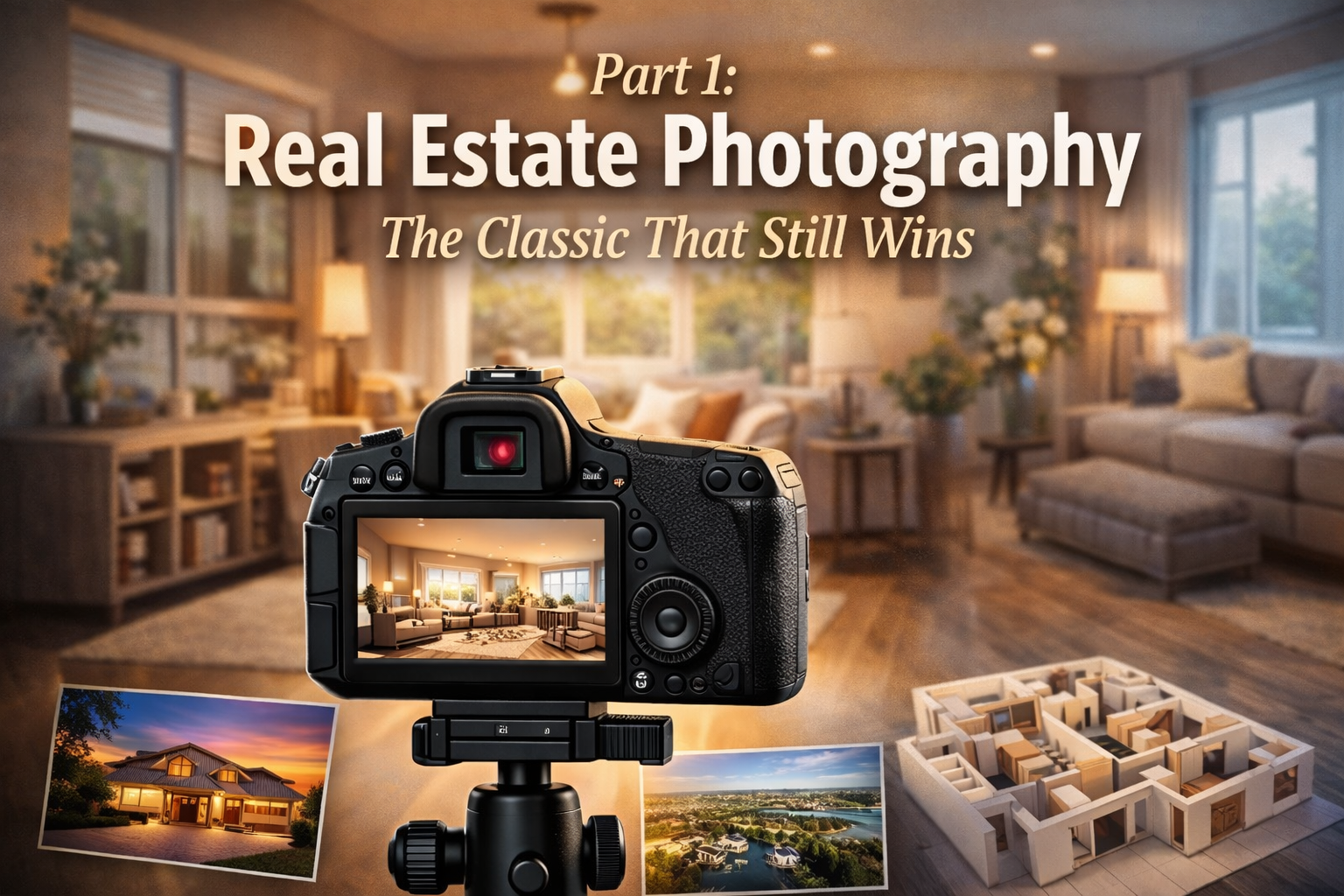
Part 1: Real Estate Photography — The Classic That Still Wins
High-quality listing photos are the foundation. Even if you do a 360 tour, your photos are still the first impression on MLS, Zillow-style platforms, social media, and brochures.
What great real estate photography does best
It sells the feeling.
Photos are curated. They guide the eye. They highlight the best angles and features: natural light, finishes, staging, views, and “hero shots” like kitchens and primary suites.
A good photographer doesn’t just take pictures of rooms—they create a visual story:
-
the welcome shot
-
the flow shot
-
the wow shot
-
the lifestyle shot
Common mistakes that tank listings
If you’ve ever seen a listing and thought, why does this place feel off? it’s usually one of these:
-
Tilted vertical lines (walls “falling over”)
-
Blown-out windows (pure white rectangles)
-
Over-HDR (that crunchy, radioactive look)
-
Wrong lens / too wide (rooms look fake and stretched)
-
Bad lighting balance (orange lamps + blue daylight = chaos)
-
Messy staging (clutter kills perceived value)
Photos don’t need to be “artsy.” They need to be clean, honest, and flattering.
When photography alone is enough
Photography is often sufficient when:
-
the home is simple in layout
-
it’s vacant and straightforward
-
it’s lower price point where speed matters more than deep exploration
-
you’re listing something like a condo with a standard footprint
But photography alone has a weakness: it doesn’t fully answer the buyer’s biggest question…
“How does this place actually connect?”
That’s where tours shine.
This One Is Good Too: How to Create an Eye-Catching Zillow Listing

Part 2: 360 Virtual Tours — The Layout and Trust Machine
A 360 tour lets someone “stand” in a space and look around. That one difference—control—changes the psychology.
Photos show what you want people to see.
Tours let people verify what’s real.
What 360 tours do best
They reduce doubt and filter serious buyers.
Buyers can:
-
understand layout and room relationships
-
see how spaces connect
-
assess depth, size, and flow more accurately
-
revisit the home repeatedly before a showing
For agents, tours also reduce wasted showings. People who book after touring are more qualified and less likely to walk in and say, “Oh… it’s smaller than I expected.”
When virtual tours are a big advantage
Tours are especially powerful for:
-
larger homes (layout matters)
-
unique floorplans (photos confuse people)
-
out-of-town buyers
-
luxury (expectation of premium marketing)
-
investment properties (buyers want efficiency)
-
homes where trust matters (older homes, quirks, tight spaces)
The downside: tours don’t “sell the romance” by themselves
A raw 360 tour can feel flat and technical. It’s great for understanding, but not always great for falling in love. That’s why tours don’t replace photos—they complete them.
The Best Strategy: Use Both (and Make Them Work Together)
If you want the most effective listing package, think like a movie trailer and a walkthrough combined:
-
Photos = the trailer
-
360 Tour = the walkthrough
-
Floor plan (if included) = the map
A practical “best of both” package
For most listings, a strong combo looks like:
-
25–45 pro photos (depending on size)
-
360 tour of key areas (or full interior)
-
Optional add-ons:
-
twilight exterior (when it makes sense)
-
drone photos/video (for land, view, privacy, estate)
-
2D floor plan pulled from tour data (huge value)
-
This combo does one thing extremely well: it attracts clicks and converts them into showings.
How to Prepare a Home for Photography and a 360 Tour
Here’s the old-school truth: the camera doesn’t create cleanliness—it reveals it.
The quick prep checklist that matters most
-
Clear countertops (kitchen + baths)
-
Hide trash cans, cords, chargers, remote piles
-
Remove small rugs if they look worn or bunched
-
Replace burned-out bulbs (match color temperature if possible)
-
Open blinds, clean windows if possible
-
Put toilet lids down (yes, always)
-
Stage lightly: pillows straight, beds tight, chairs aligned
-
Park cars away from the front if you can
Tour-specific prep (extra important)
360 tours are less forgiving because they show everything.
-
Remove personal photos (privacy + distractions)
-
Hide cleaning supplies and laundry baskets
-
Tuck away pet bowls and litter boxes
-
Make sure doors are either fully open or fully closed (no awkward half-doors)
-
Keep ceiling fans off (motion blur + weird artifacts)
What Separates “Okay” From “Premium” Visuals
You don’t need heavy editing. You need consistency and craft.
Premium visual marketing usually has:
-
straight vertical lines (correct perspective)
-
natural color (no orange/green casts)
-
controlled highlights (windows visible)
-
balanced light (flash used tastefully or strong ambient technique)
-
intentional composition (not just “stand in corner and shoot”)
And for tours:
-
smooth navigation (logical scan points)
-
no “teleport confusion”
-
correct alignment and leveling
-
clean transitions and no missing rooms
Pricing and Value: Where the ROI Actually Comes From
People love to argue about cost per photo or tour. That’s the wrong metric.
The correct metric is:
-
days on market
-
number of qualified showings
-
strength of offers
-
how confident buyers feel
High-quality visuals don’t just make it look pretty. They create clarity and momentum—which is what helps properties move.
Your content goes here. Edit or remove this text inline or in the module Content settings. You can also style every aspect of this content in the module Design settings and even apply custom CSS to this text in the module Advanced settings.
The Bottom Line
If you want the strongest listing presentation:
-
Use professional photography to hook attention and make the home feel desirable.
-
Use a 360 virtual tour to build trust, communicate layout, and qualify serious buyers.
-
Use both when you want maximum reach and conversion—especially for anything with layout complexity, premium price, or out-of-town interest.
Real estate has always been about getting people through the door. Now, getting them through the digital door is step one.
Do that well, and the rest gets easier.